
Last updated November 14, 2026
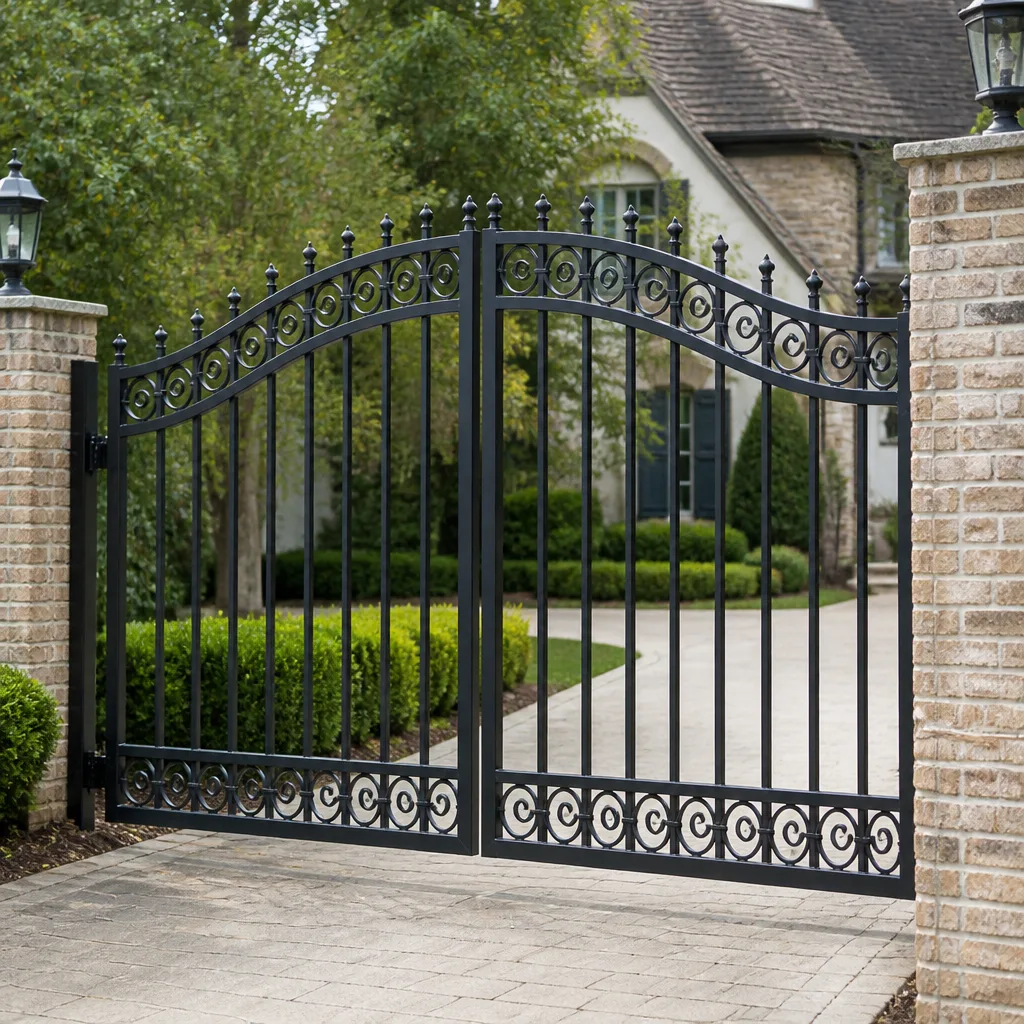 Wrought iron
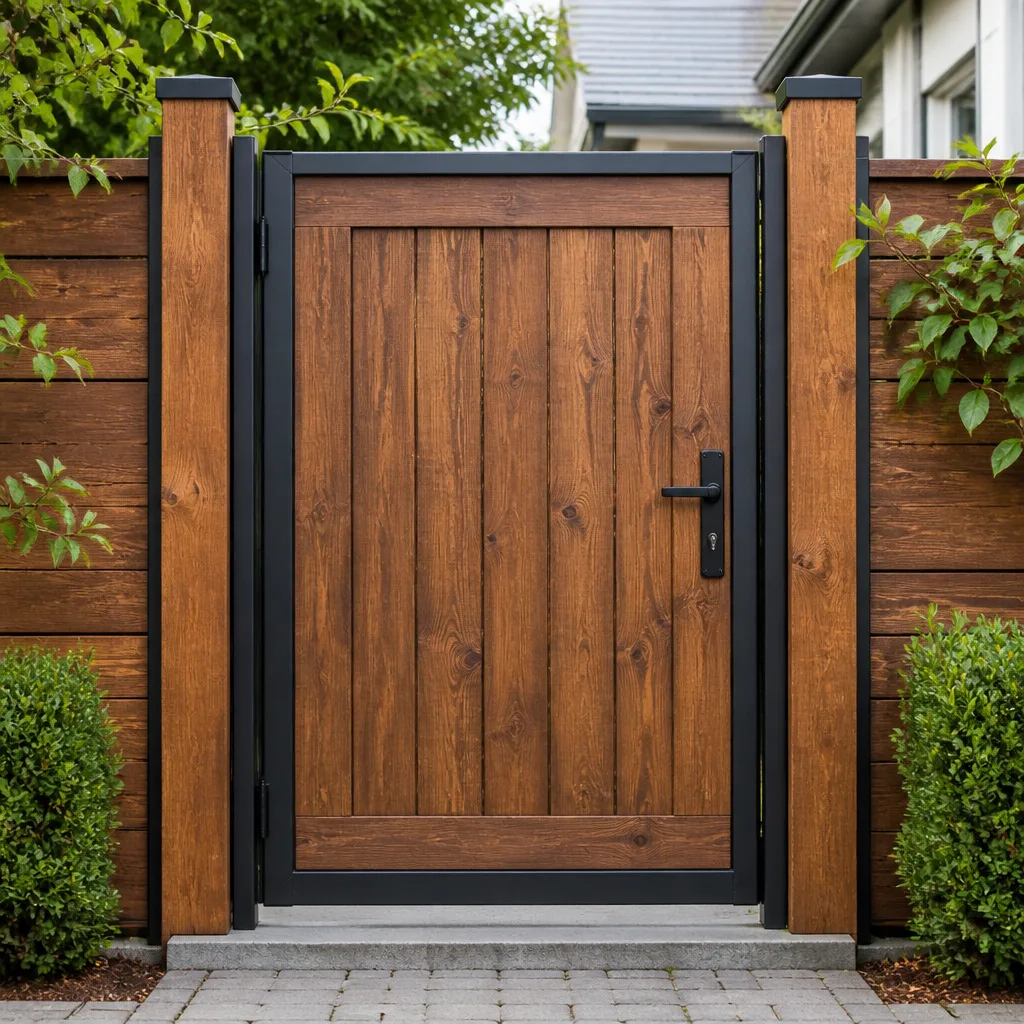 Wood & steel frame
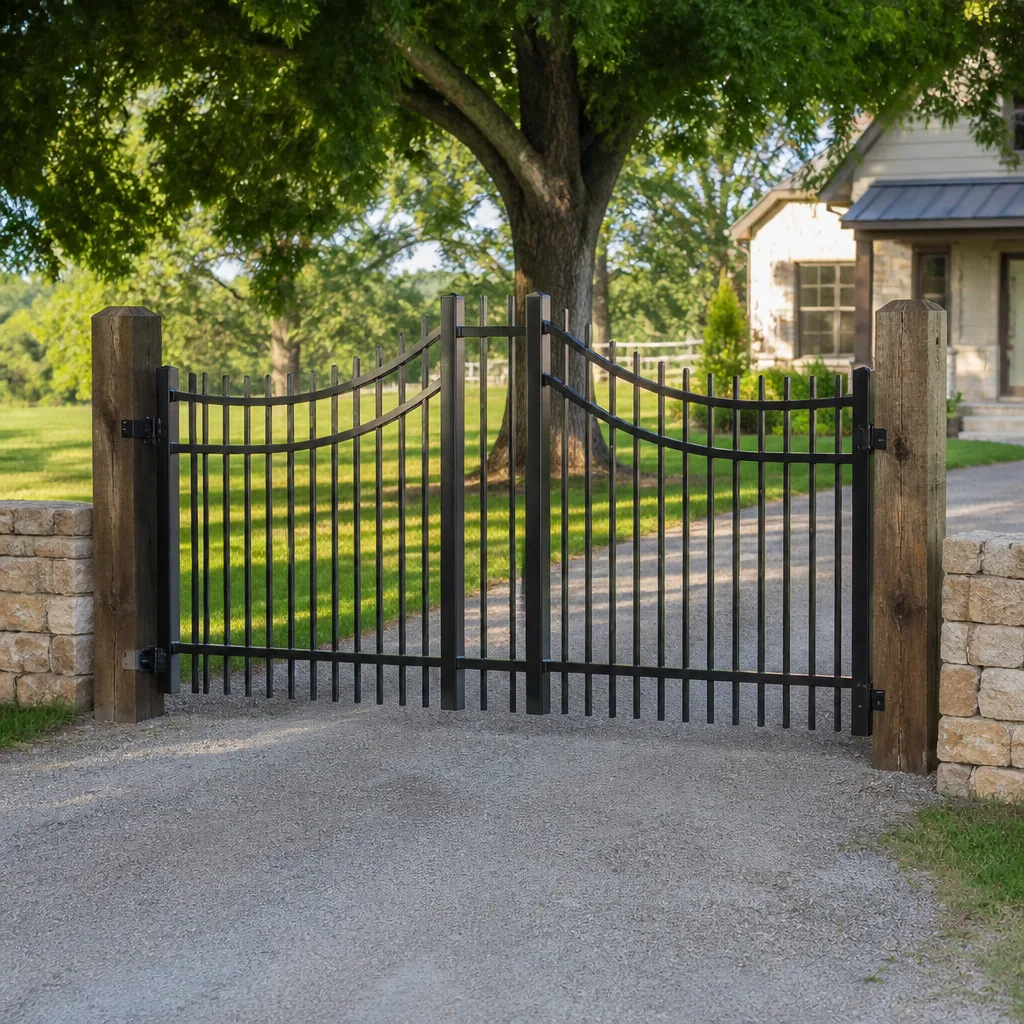 Farm & ranch
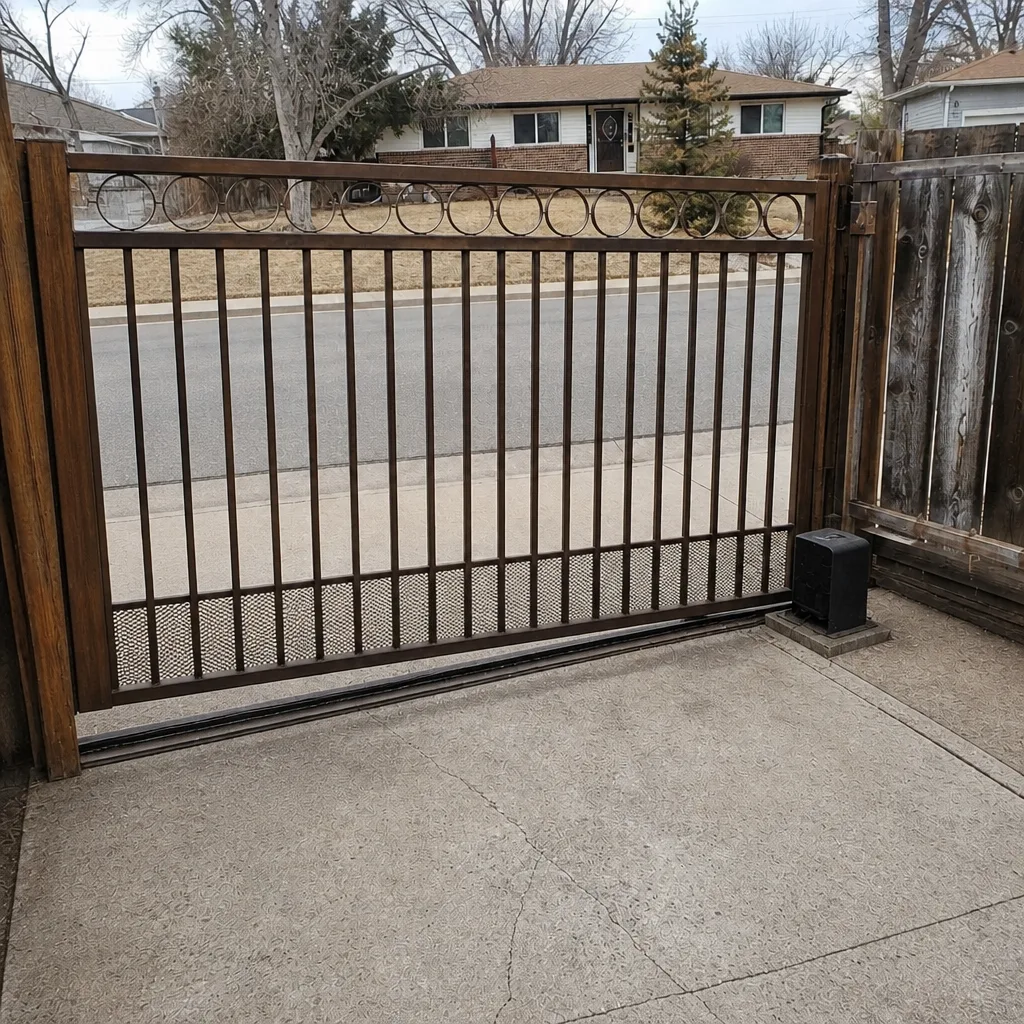
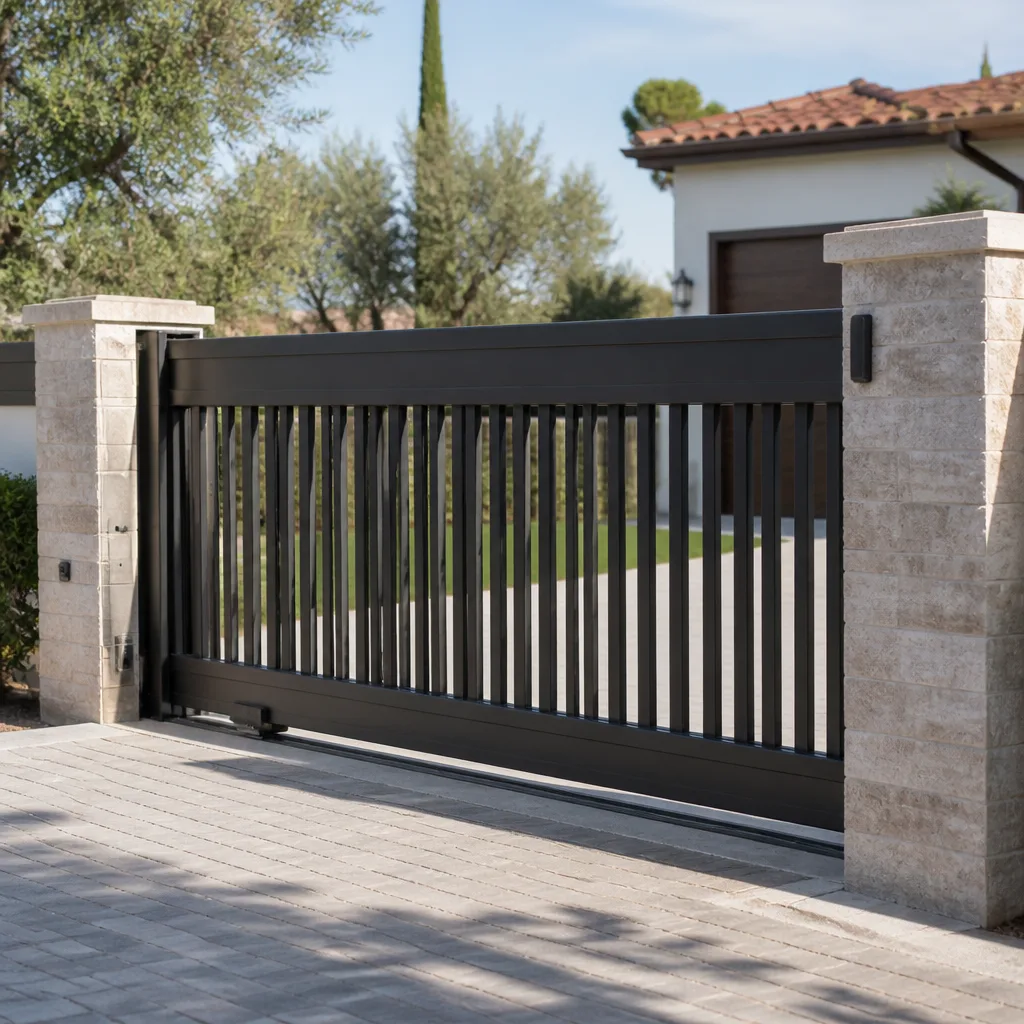 Sliding driveway gates
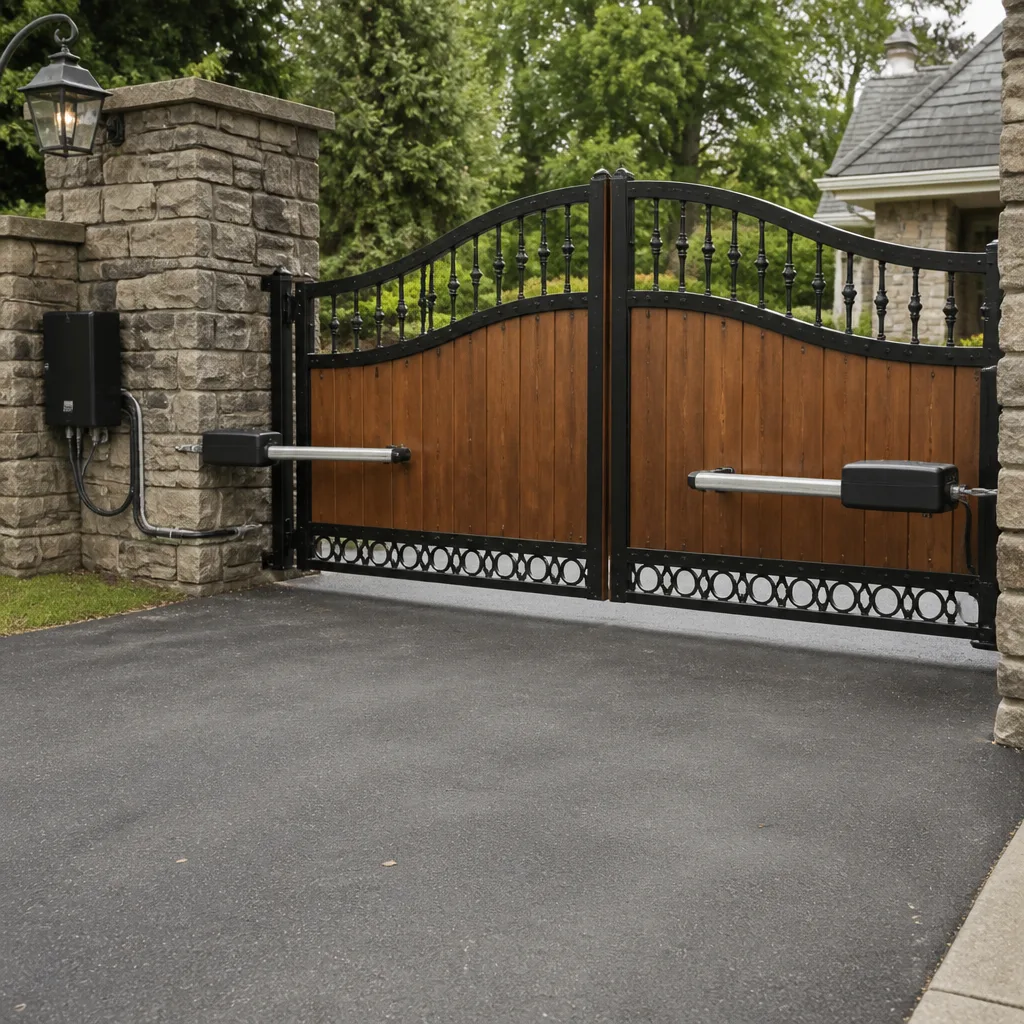 LiftMaster operators
Free on-site gate assessment - hinges, posts, and your LiftMaster or Nice gate operator checked before anything is quoted
The assessment is free and the quote is the invoice.
Get your free estimateGate Repair Emergency Preparedness Guide for Centennial Homes
Most gate owners think they’ll figure it out when it happens. Then it happens at 11 PM in a snowstorm, the driveway gate is frozen halfway open, and nobody in the house knows where the manual release lever is or what the operator brand even is. Here’s the uncomfortable part: nearly every electric gate in Centennial comes with a manual release, but knowing it exists and being able to use it in the dark, under pressure, without power, are two very different things. This guide walks through the preparation work you should do now: how to disengage each gate type safely, how to keep the property secure while a gate sits open, what information to have ready when you call for emergency gate repair in Centennial CO, and how a power outage affects battery backup in a Colorado winter.
Quick Answer
Emergency gate preparedness comes down to three things prepared in advance: know where your manual release is and how it works for your specific gate type, keep a documented record of your operator make and model so a technician arrives with the right parts, and have temporary security measures ready for when a gate must stay open or manually held shut. When you call a 24-hour line, the more accurate your description of the failure, the faster the technician diagnoses it on arrival.
Styles & brands we work with
- Wrought iron
- Wood & steel frame
- Farm & ranch
- Sliding driveway gates
- LiftMaster operators
Table of Contents
- Manual Release Procedures by Gate Type
- Power Outage Protocol in Centennial Winters
- Battery Backup Testing and Lifespan
- Temporary Security When a Gate Must Stay Open
- What to Tell a 24-Hour Gate Repair Service When You Call
- Pre-Failure Documentation: What to Record Now
- Safety Rules Around Operators and Heavy Panels
- When to Call a Professional
Manual Release Procedures by Gate Type
A manual release disconnects the gate leaf from the operator so you can move it by hand without power. How you release it depends entirely on the operator and gate type, and doing it wrong can strip the operator gear or let a heavy panel swing free. Know your system before you need it.
How to Identify Your Release System
Look at the operator housing on the gate post or behind the gate leaf. Swing operators typically have a release key, lever, or a bypass that lets the arm pivot. Slide operators usually have a manual release lever or a key-operated clutch that uncouples the motor from the track. Track-mounted operators may have a chain hoist or crank. If you can’t tell, the operator model number tells you the release method, and that’s a detail worth recording now rather than at midnight.
Preparation Steps for Any Gate Type
- Locate the manual release before you need it. Open the operator housing once, in daylight, and find the lever or key slot.
- Test the release with the power on and the gate at rest, not mid-cycle. Move the gate by hand a few inches to confirm it disengages cleanly.
- Practice the release a second time with someone helping, so two people in the household know the procedure.
- Record the release method, photograph it, and keep the key or tool where you can find it in the dark.
- Note whether your gate is crash-rated. Crash-rated systems are built heavier and should be released with a specific procedure, so confirm with a technician rather than guessing.
We work exclusively on gates here in Centennial, and we’ve seen plenty of gate failures that started with a release that was done wrong and damaged the operator. If you’re unsure how your gate disengages, the safest move is to have it demonstrated on-site once. There’s a difference between a gate that’s ready for an outage and one that isn’t.
Power Outage Protocol in Centennial Winters
A power outage is the most predictable cause of a gate failure, and in Centennial the stakes are higher because of winter. When a storm takes the power out, the gate stops wherever the operator left it. An open gate leaves the property exposed. A closed gate with a dead battery can leave you locked out on the driveway side with no way in.
What to do during an outage:
- Check whether the gate is in a safe position. If it’s open, secure the property with temporary measures until you can close it.
- Don’t force the gate leaf against a locked operator. This is how panels bend and gears strip.
- Use the manual release to move the gate by hand if you need to close it. Cycle it slowly.
- Wait for power to return, then run a full open-and-close cycle and watch for anything that looks different.
- If the gate doesn’t resume normal operation after power returns, treat it as a repair call, not an outage problem.
Cold matters here. Battery chemistry in gate operators doesn’t perform the same way it does in warm weather, and Colorado winter temperatures put real strain on any backup system. A battery that lasted through the summer may not carry the gate through a long outage in January. Testing in late fall, before the first real cold snap, gives you a chance to service or replace the battery while conditions are easy. Power outages in Centennial are less frequent than in some front-range towns, but the timing of a failure is never convenient.
Battery Backup Testing and Lifespan
A battery backup on an electric gate is a small sealed battery or battery bank inside the operator housing. It’s designed to keep the gate operating for a number of cycles during a power loss, not to run the gate indefinitely. Most sealed batteries we see hold a usable charge for two to four years before they start to weaken. That’s a general rule of thumb, not a guarantee, because climate stress, cycle frequency, and operator load all affect the real number.
How to Test Your Backup
- With the gate closed and at rest, cut power at the disconnect or breaker feeding the operator.
- Press open. The gate should cycle on battery power.
- Cycle the gate open and closed two or three times and listen for slow travel or a strained motor sound. Both are signs of a weak battery.
- Restore power and confirm the gate returns to normal wall power.
If the gate struggles, stalls, or refuses to move during a battery test, have it looked at before you depend on it. Running the test in the fall gives you time to replace a battery before a cold, dark outage makes the decision for you. If you have a LiftMaster, FAAC, BFT, or Mighty Mule operator, the battery is specific to the board, and we can confirm what your unit takes.
Temporary Security When a Gate Must Stay Open
The gate is broken, and it’s going to be repaired, but it may sit open for hours. During that time your driveway and property are exposed. Temporary security measures are a practical part of the emergency plan, and none of them requires a professional.
Options to have ready before you need them:
- Chain and a padlock sized to the gate frame and posts, kept somewhere dry and reachable.
- A portable barricade or movable post that fits your driveway width, if your property layout allows.
- A motion-activated light or portable floodlight aimed at the driveway. Light is often more effective than hardware at deterring opportunistic entry.
- A plan for the driveway gate: leave a vehicle parked across the opening if that’s practical and safe for fire access.
- For an HOA or commercial property, notify the manager or security contact so the open gate doesn’t look abandoned.
If a gate has to be manually held closed, don’t prop a gate leaf against a fixed object with a rock or brick. A gate swinging in the wind, even slightly, can shift the prop and strike a person or a vehicle. Chaining the gate to a post is more reliable. The safer route is to call for service and keep the property monitored until a technician can arrive.
What to Tell a 24-Hour Gate Repair Service When You Call
The single biggest factor in how fast a technician fixes your gate is the information you give on the phone. If you can name the operator brand, the model, and what you observed when the gate stopped, the technician can load the right parts and arrive prepared. If you can only say “the gate doesn’t work,” the visit starts with a diagnosis that may take twice as long.
Have these ready when you call:
- Operator brand and model. Look for a label inside or on the operator housing. Common brands in Centennial include LiftMaster, FAAC, BFT, and Linear, but knowing yours is what matters.
- Gate type: swing, slide, crash-rated, or barrier arm.
- Exactly what happened. Did it stop halfway? Reverse without command? Was there a loud noise? Was the gate moving when the power went out?
- Any warning signs leading up to it. Slow travel, hesitation, a grinding sound, or a clicking operator are all clues.
- Access notes. Where the operator is mounted, where the disconnect switch is, and whether a vehicle or locked gate is blocking access.
- Prior service history, if you have it. Recent repairs or operator replacements tell the technician a lot.
If you need a repair and the gate has stopped, call (866) 361-9624. We answer 24/7. Fast dispatch from 7am to 7pm, Sunday through Friday. If a call comes in outside dispatch hours, it’s booked into the next opening, so the sooner you call, the sooner you’re on the schedule. The estimate is free, and the price is set per job by the written estimate before any work begins.
Pre-Failure Documentation: What to Record Now
This is the part almost nobody does, and it’s the part that pays off most. Record your gate system’s details while everything is working, so you aren’t scrambling later. Keep a single page, or a note on your phone, with the following:
- Operator make and model number.
- Serial number, located on the operator label or inside the housing.
- Installer name and phone number, if the gate was installed by a previous owner.
- Date of install, and any service visits since.
- Release procedure description and a photo of the release lever or key slot.
- Battery type and date it was last replaced.
- Power source location: the breaker or disconnect feeding the operator.
- Any HOA or property management contact responsible for the gate.
Photograph the operator label, the release mechanism, and the gate from a few angles. That file makes every future service call faster, whether it’s a repair, an electric gate repair, or a replacement decision. If you don’t know what your operator is, we can help you identify it and confirm the release method. For anything involving the operator wiring or the electrical feed, leave it to a trained technician.
Safety Rules Around Operators and Heavy Panels
Gate systems have real hazards: heavy panels that can crush a person, slide gates that can come off their track and fall, and electrical components in the operator that carry live power. Before you touch anything, use the safety rules below.
- Never reach into the operator housing with the power on. The operator wiring, motor board, and battery connections are all live when powered.
- Never stand between the gate leaf and the frame while the gate moves, and don’t put a vehicle or person in the path of a gate that’s cycling.
- For any gate over a few feet tall, disengage and move the gate only with a second person present, not alone in the dark.
- If a slide gate comes off its track and hangs, don’t push it back on. Leave it and call for service.
- If the operator has a tripped breaker or a visible burn mark on the board, don’t reset and retry. Call a technician.
Every year, we see the aftermath of do-it-yourself attempts on gate operators: a bent gear, a shorted board, a gate leaf that won’t line up with its latch. The cost of the original problem is small compared to the cost of undoing a mistake. A trained technician on-site is the safe route for anything beyond the release lever. For the full picture of what a repair visit covers, see our gate repair page.
Common Mistakes to Avoid
- Never testing the manual release. A release that was never tested can seize from rust and cold, and Centennial winters will find it. Test it in the fall, before the first hard freeze.
- Not knowing the operator brand. A service call on a LiftMaster that turns out to be a FAAC costs time even if both are common. Photograph the label and keep it in your notes.
- Forcing a stuck gate. Pushing a powered gate against a locked operator bends panels and strips gears. Disengage first, then move it by hand.
- Skipping the battery test. A backup that carried the gate through a summer outage may not survive a January outage. Test before the cold.
- Blocking the gate with a rock or brick. A prop shifts when the wind moves the gate. Chain it to a post instead.
- Calling without details. “The gate is broken” is the slowest call you can make. Have the model, the symptom, and the access notes ready.
- Assuming winter is the only risk. In Centennial, summer storms, lightning, and power surges cause their share of operator failures, so keep the release and the plan handy year round.
See the difference
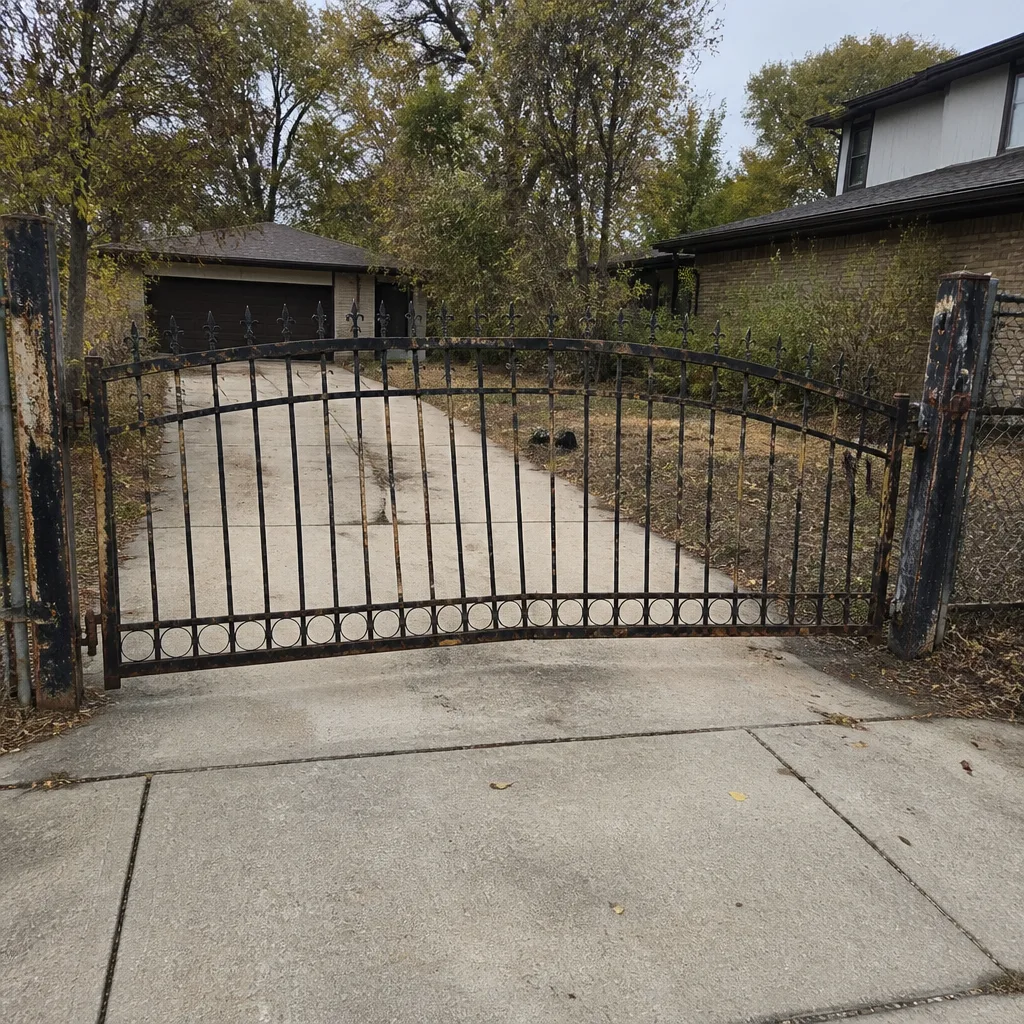 Before
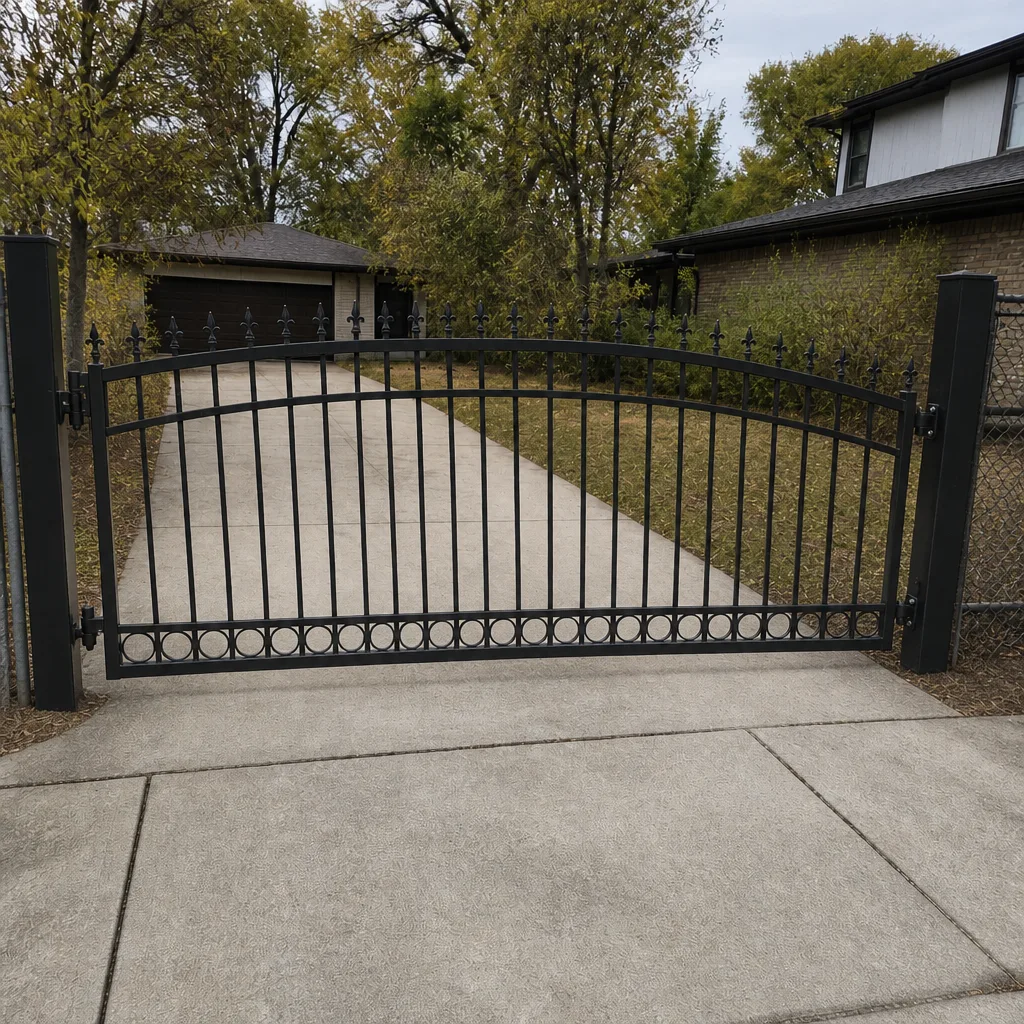 After
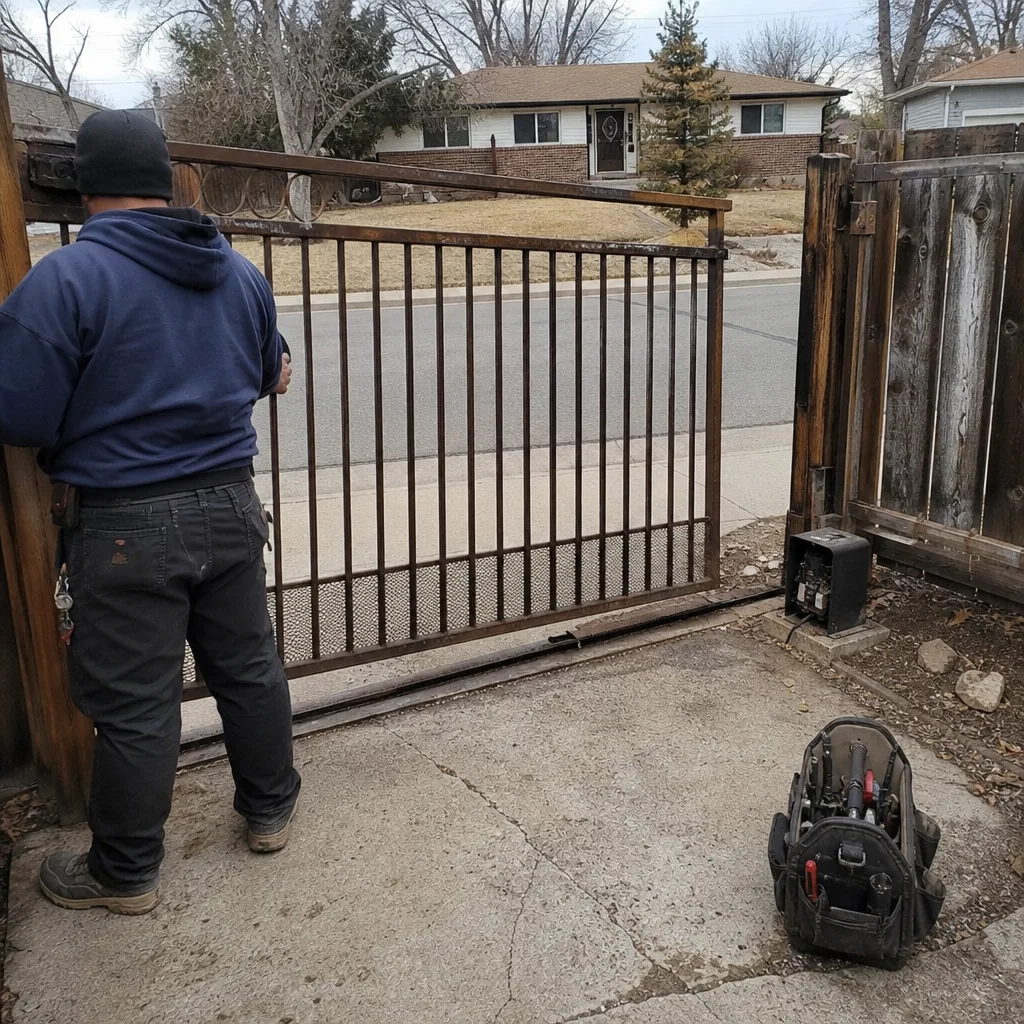 Before
 After
 Before
 After
When to Call a Professional
Call a professional when the gate is stuck in the open position, when the operator has failed or is making sounds it didn’t make before, when a slide gate has come off its track, or when you’ve disengaged the gate manually and can’t get it back into operation safely. A gate that reverses without command, stops midway, or won’t fully close indicates a sensor or board fault that a technician can diagnose, not a homeowner.
Our approach is simple. Whether your operator is a Mighty Mule, a LiftMaster, or anything else, we’ve seen it. We can diagnose both the mechanical gate structure and the electronic operator. If the gate has stopped mid-open, call. Gate Repair Centennial offers free estimates in Centennial. Call (866) 361-9624. We answer 24/7. Fast dispatch from 7am to 7pm, Sunday through Friday. The price is set per job by the written estimate, agreed before any work starts.
Frequently Asked Questions
A gate repair emergency is any situation where a gate is stuck open and leaving the property exposed, a gate has stopped in a position that blocks safe access, or a gate is damaged and at risk of falling. If the gate is stuck halfway and you can’t safely move it by hand, treat it as a repair call. Call (866) 361-9624 for a free estimate.
Your manual release is usually on the operator housing on the gate post or behind the gate leaf. Swing operators have a release lever or key, slide operators have a lever or clutch, and track-mounted systems may have a chain hoist. If you can’t find it, photograph the operator label and we can identify the release method for your model.
Battery backups on gate operators typically last two to four years before they weaken, and Centennial winter temperatures shorten that window because cold drains batteries faster. Test the battery before the first cold snap each fall. If the gate stalls or slows on its battery test, have it looked at before you depend on it.
Yes, if you use the manual release to disconnect the operator first. Never force a powered gate against a locked operator; that’s how panels bend and gears strip. Disengage, then move the gate slowly by hand. If the gate is a heavy crash-rated panel, use two people and call for help if it’s off balance.
Have your operator brand and model, the gate type, what the gate was doing when it stopped, and access notes ready. The model number alone tells a technician which parts to bring. Call (866) 361-9624. We answer 24/7, and estimates are free.
Only if the backup battery is healthy and holding a charge. Test the battery in the fall, and replace it before winter if it shows any weakness. If your gate loses power and won’t cycle on battery, it’s a repair visit, not an outage. Our electric gate repair service covers operator, motor, and access-control diagnostics.
The Bottom Line
Emergency gate preparedness comes down to three habits: know your manual release and test it before you need it, keep a documented record of your operator so a service call starts with facts instead of guesswork, and have temporary security measures ready for the hours a gate has to sit open. In Centennial, add the winter layer: test the battery before the cold snap, keep the release clear of ice and rust, and know how a power outage affects your operator. Do the preparation while everything is working, and a gate failure turns from a crisis into a repair appointment. Gate Repair Centennial handles repair, electric gate repair, and full installation across the home and commercial gate types used throughout Centennial, and we’re a gate-exclusive specialist, so we know the systems in this area.
If your operator is a LiftMaster, FAAC, BFT, Linear, Viking, Ghost Controls, DoorKing, Elite, or Mighty Mule, we’ve worked on it, and we’ll tell you honestly whether repair or replacement makes more sense for the gate you have. One company for the whole life of the gate: fixing it, diagnosing the operator, or installing a new system when it’s time. You don’t need to have all the details in order before you call. Have whatever you know, and we’ll work from there.
Call (866) 361-9624 for a free estimate. We answer 24/7. Fast dispatch from 7am to 7pm, Sunday through Friday. Visit Gate Repair Centennial to see how we handle the full range of gate problems. The written estimate sets the price, and nothing begins until you agree to it.
Written by the team at Gate Repair Centennial, serving Centennial since 2014.