
Last updated November 14, 2026
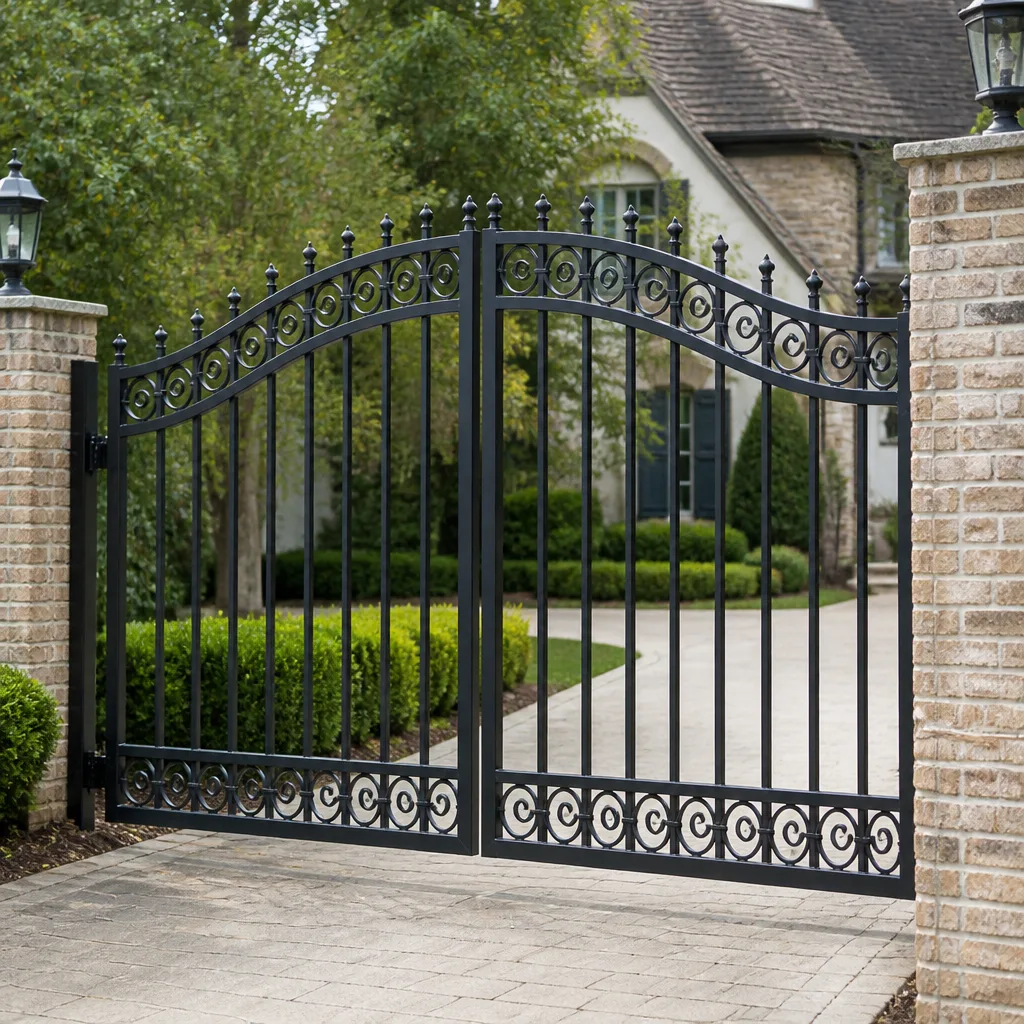 Wrought iron
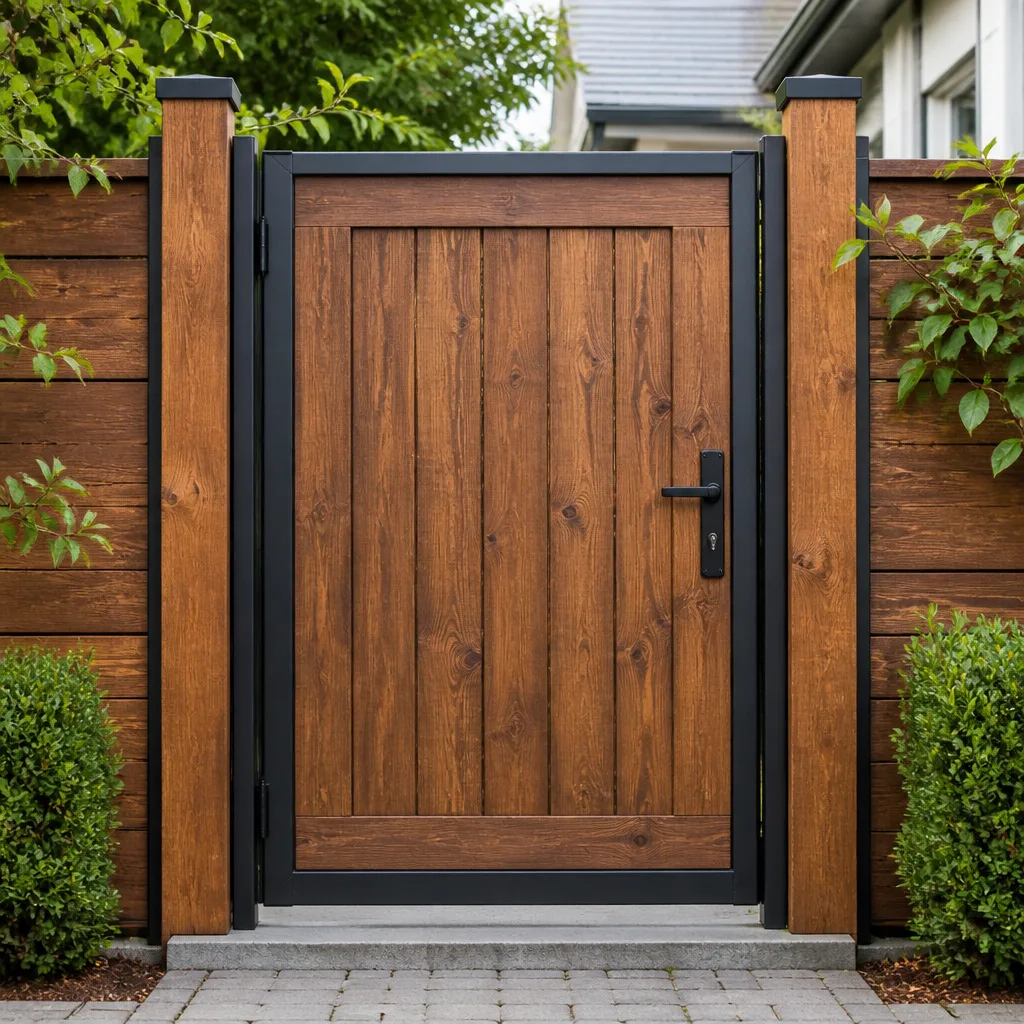 Wood & steel frame
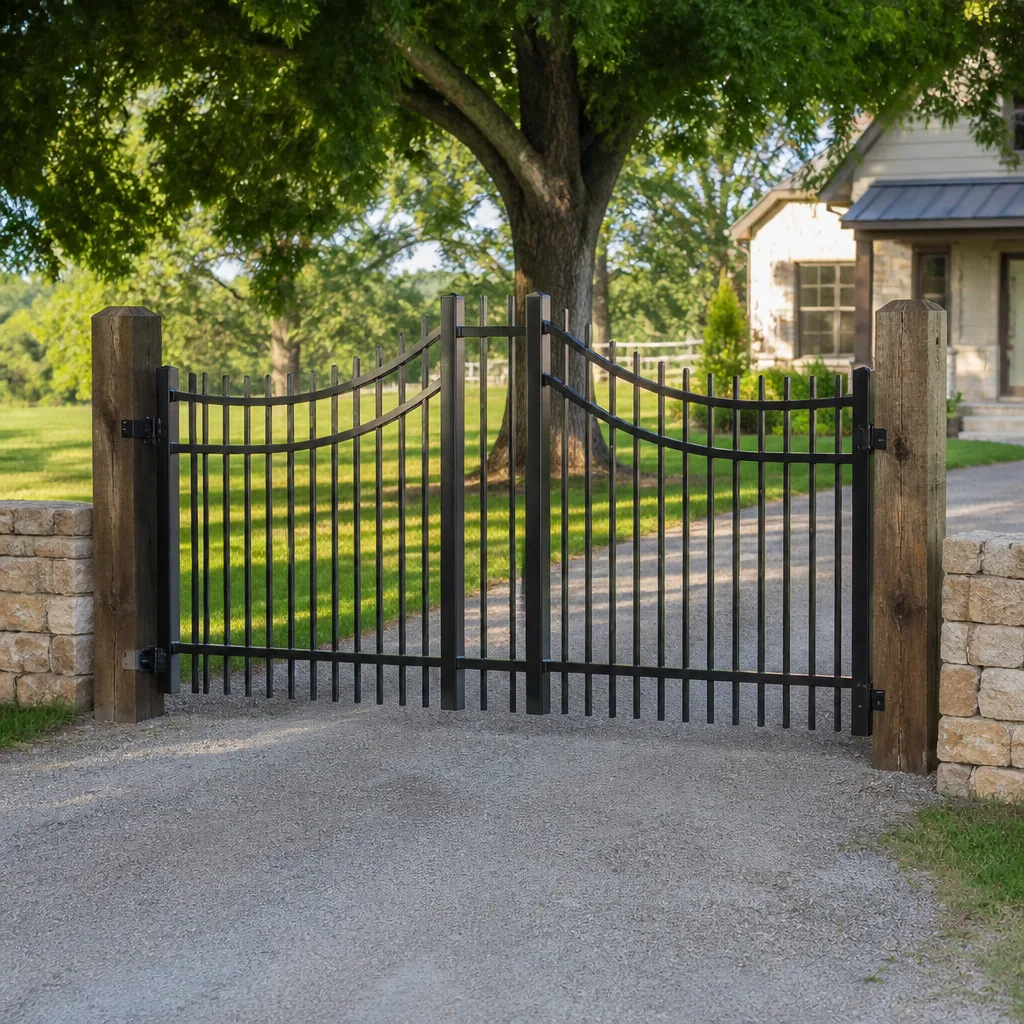 Farm & ranch
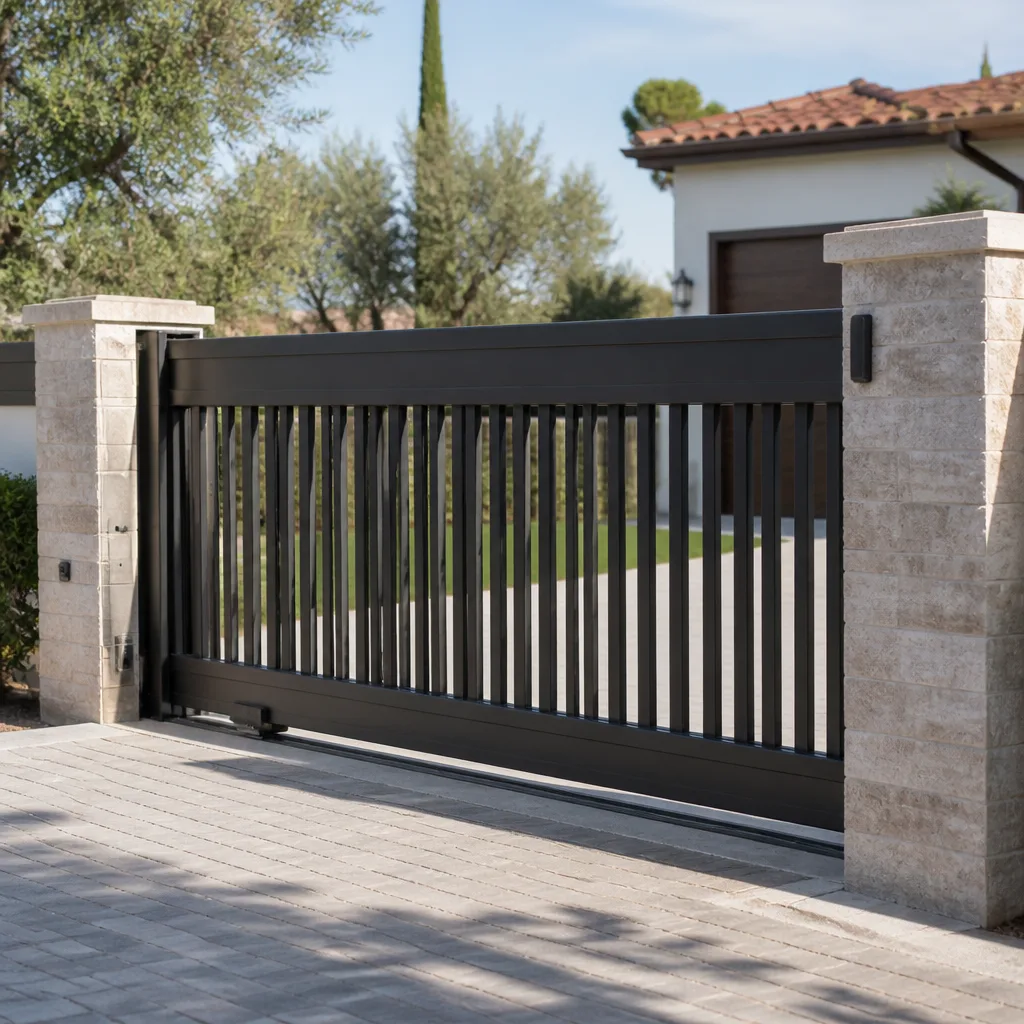 Sliding driveway gates
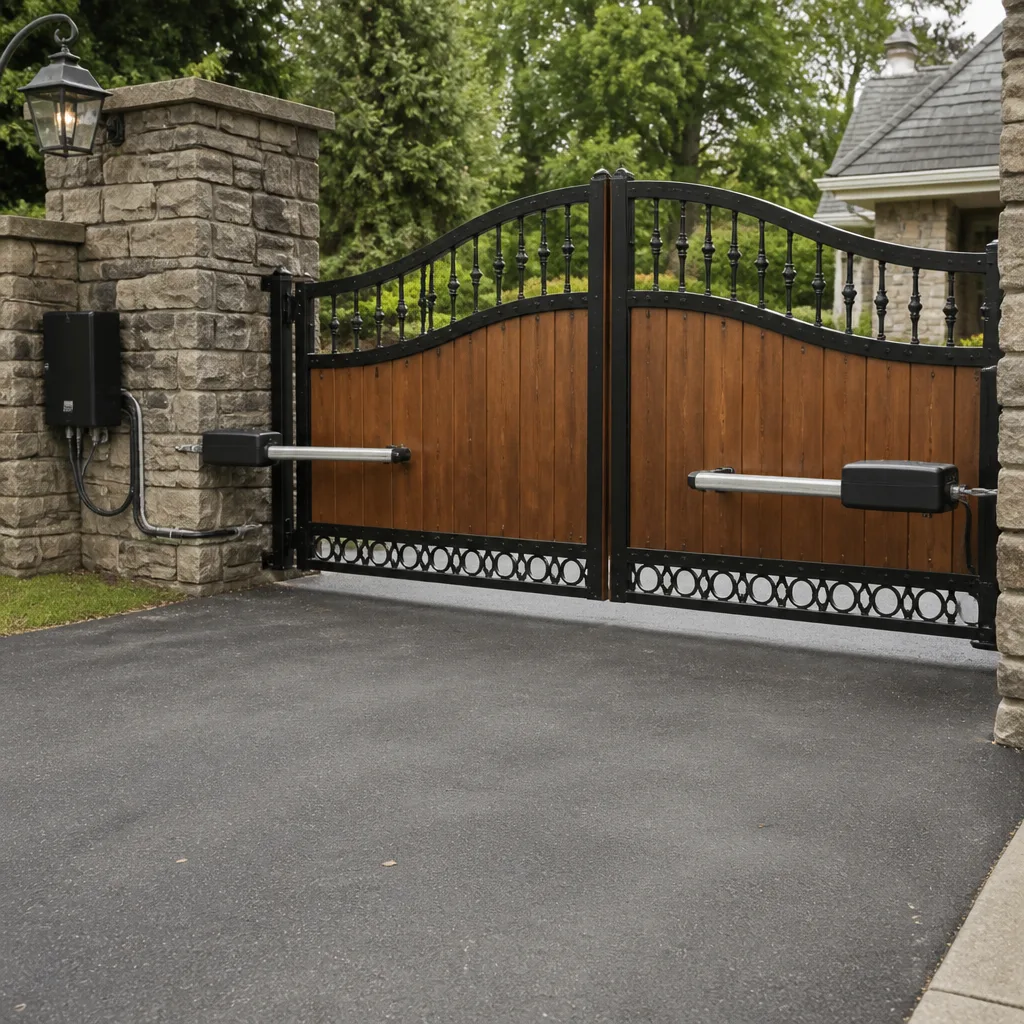 LiftMaster operators
Free on-site gate assessment - hinges, posts, and your LiftMaster or Nice gate operator checked before anything is quoted
The assessment is free and the quote is the invoice.
Get your free estimateThe Complete Guide to Gate Repair in Centennial
A gate that reverses before it closes fully and a gate that won’t open at all look like two different problems. In Centennial’s freeze-thaw climate, they’re often caused by the same thing: a post that has shifted a little further into the ground. The symptom tells you what the gate is doing. The root cause tells you what to fix. That difference matters, because it’s the gap between a small adjustment and a full rebuild. This guide walks you through a diagnosis-first approach to gate problems, maps each common failure to the fix it usually needs, and explains why the soil under a Centennial gate behaves the way it does.
Quick Answer
Most gate failures in Centennial come down to five root causes: structural movement (often from expansive clay soil and freeze-thaw cycles), mechanical wear in hinges and latches, electrical supply problems, operator or motor-side faults, and access-control failures. Identifying which category your gate falls into is the first step before calling anyone, because a structural issue and an operator fault require completely different diagnostics, parts, and budgets. The Gate Repair Centennial team handles all five categories, on both manual and automated gates.
Styles & brands we work with
- Wrought iron
- Wood & steel frame
- Farm & ranch
- Sliding driveway gates
- LiftMaster operators
Table of Contents
- Diagnosis-First: How to Identify Which System Is Failing
- Why Centennial’s Expansive Clay Accelerates Gate Problems
- Manual vs. Automated Gate Failures: Two Different Diagnostic Paths
- Which Repairs Compound in Cost When Delayed (and Which Can Wait)
- Brand Notes for Centennial Gate Systems
- What to Check Before You Call Anyone
- Repair or Replace? How to Decide
- Gate Safety: The Parts Worth Respecting
Diagnosis-First: How to Identify Which System Is Failing
Before a technician ever opens a tool bag, the most valuable thing you can do is figure out which of the gate’s four systems is failing. Think of a gate as four layers stacked on top of each other: structure, mechanism, electrical, and operator. A problem in any one layer can mimic a problem in another. A gate that won’t open might have a dead motor, or it might have a hinge so seized that the motor stalls trying to push it. Those two problems share a symptom and nothing else.
The Four Layers of a Gate
- Structural: Posts, footings, hinge mounting points, and the gate frame itself. If the gate is sagging, leaning, dragging, or refusing to latch, the structure is the first suspect.
- Mechanical: Hinges, wheels, tracks, latches, catches, and rollers on slide gates. Mechanical wear typically shows up as noise, friction, or a gate that moves unevenly.
- Electrical: Power to the site, wiring runs, transformers, batteries, and solar setups. If the operator has no power, nothing downstream will work.
- Operator: The motor, control board, limit switches, remote receiver, safety edges, and access-control hardware. Operator faults usually produce specific behavior: the gate moves partway, reverses, double-tries, or ignores remotes entirely.
Why the Order Matters
Diagnosing from the ground up saves money. A gate that won’t open could be a control board, but if you replace the control board on a gate whose post has shifted eight degrees into the soil, the new board will fail too, and for the same reason. In our experience working across Centennial, the most expensive repairs we see are the ones where the wrong layer was addressed first. The structure gets checked before the mechanism, and the mechanism before the electrical and operator. That order is not arbitrary. It reflects how the failures usually cascade.
A Simple Starting Framework
Start with the eye test. Does the gate sit visual and square in its opening, or does it lean? Then move to the hand test: on a manual gate, does it swing through a full arc with even resistance, or does it catch, bind, or drag? On an automated gate, does it fail in the same spot every time, or only some of the time? A consistent failure point points to a mechanical obstruction; an intermittent failure points to electrical or operator. Those three checks – visual, hand, and pattern – will put you in the right category before you pick up the phone.
Why Centennial’s Expansive Clay Accelerates Gate Problems
The soil under a lot of Centennial properties contains expansive clay, and that single fact explains a surprising share of the gate problems we diagnose. Expansive clay doesn’t hold its volume. It swells when it takes on moisture and shrinks as it dries. Every wet spring and dry winter pulls and pushes the ground beneath gate posts, footings, and hinge points. Over time, the post that was set perfectly plumb starts to lean, and the gate that used to close on the latch now catches on the top corner.
How Freeze-Thaw Works on a Gate Post
In Centennial’s climate, winter is the second half of the problem. Water seeps into the soil around a footing and freezes. Water expands as it freezes, and that expansion pushes laterally and upward against the post. When the ground thaws, the post settles back – but rarely to exactly the same position. Cycle that through enough winters, and a gate post that was fine five years ago is now a couple of degrees off plumb. Multiply a small tilt by the length of a gate leaf, and the far edge can travel inches.
Alignment Problems vs. Operator Problems
Here’s why this matters for diagnosis: a gate that has gone out of alignment because of post movement will often look like an operator failure. The operator pushes, meets resistance it can’t overcome, and reverses. The board logs nothing unusual. The safety edges are fine. The motor is working exactly as designed; it’s just fighting a gate that no longer swings freely. Homeowners call us believing they need a new operator, and what actually needs attention is the footing and the post. That’s the diagnosis-first approach in action, and on a Centennial gate it’s the most common reason we recommend structure work over electronics.
What to Watch For Seasonally
Check your gate after the first freeze and again after spring thaw. Look for a leaf that hangs lower, a latch that misses by a fraction, or a gate that newly drags on the driveway. Those small seasonal changes are the clay talking. Catching them early means a small adjustment instead of a rebuild.
Manual vs. Automated Gate Failures: Two Different Diagnostic Paths
Manual and automated gates fail in different ways, and the diagnostic approach for each is completely different. A manual gate is a purely mechanical system. If it doesn’t work, the answer is somewhere in the structure, the hinges, the latch, or the frame. A gate that swings on a manual hinge has no electronics to point a finger at. That simplifies the diagnosis but it also means manual gate failures tend to develop slowly, and the fix usually involves the hardware or the post rather than a part you can swap in five minutes.
Manual Gate Failure Patterns
- Sagging: Almost always a hinge or post issue, and often both together. A post that has settled shifts the weight, and a hinge that was carrying the load unevenly wears out faster.
- Dragging on the ground: Post tilt, frame warping, or wheel wear on a slide gate. A gate that drags needs its alignment corrected before anything else.
- Latch miss: The gate closes but the latch doesn’t catch. On a Centennial gate this is a classic symptom of footing movement, not a broken latch.
- Binding mid-swing: Rust, debris, or a hinge with worn bushings. This one usually announces itself as squealing or grinding before it fully seizes.
Automated Gate Failure Patterns
Automated gates produce a wider range of symptoms because the operator adds a whole control layer. A gate that reverses mid-travel is signaling a safety-edge trip or a limit issue, not a structural fault. A gate that opens but won’t close usually has a reversed safety signal or a mis-set limit. A gate that double-tries and stops is often fighting mechanical resistance and hitting a current-sensing threshold. And a gate that does nothing at all has no power, a dead board, or a remote receiver problem.
Why the Two Require Different Approaches
On a manual gate, you can usually feel the problem. On an automated gate, the operator masks the feel: the motor overcomes friction you’d notice by hand, or the safety edges stop travel before you can see what’s wrong. Our technicians meter the electrical side, check the safety edges, and watch the operator’s behavior through a full cycle. That’s the discipline electric gate repair requires: the mechanical gate and the electronic system have to be diagnosed as a pair, because the operator’s behavior is often a report on the mechanical gate’s condition.
Which Repairs Compound in Cost When Delayed (and Which Can Wait)
Not every gate problem needs attention today, and knowing which ones compound will save you real money. The rule of thumb we use: if a repair is making a second component work harder, it compounds. If not, it can usually wait for a scheduled visit. The triage ranking below reflects how we prioritize problems on Centennial gates.
Urgent: Fix These Promptly
- A gate post that has visibly shifted: Every day it leans, gravity and the swing of the gate put more load on the hinges and the operator. What starts as a footing adjustment becomes a hinge replacement, then an operator strain, then a frame that needs straightening. This is the most compounding repair on the list.
- A gate that reverses or fails safety-edge tests: Safety edges protect people and vehicles. A failed edge that isn’t addressed means the safety logic is compromised. Get it diagnosed before the gate stays in service.
- A burning smell, tripped breaker, or buzzing operator: Electrical faults don’t stay small. Stop using the gate and have the electrical side checked.
- A slide gate that drags or comes off its track: A gate that jumps the track can fall. Heavy panels are a crush hazard, and a partially dislodged gate is dangerous to operate.
Monitor: These Can Wait for a Scheduled Visit
- A single squeak or groan that doesn’t affect how the gate swings.
- A latch that catches with a slight push but does catch.
- Cosmetic paint or finish wear on a gate frame.
- Slow remote response when the gate still opens every time.
- Minor frame rust on a gate that’s otherwise square and swinging evenly.
How We Use This Ranking
When you call, we’ll ask a couple of questions to sort your problem into one of these tiers. That’s part of what makes gate repair practical: not every problem is an emergency, and we’ll tell you plainly when something can wait. The triage also protects you from the opposite error, which is treating a compounding structural problem as if it were a squeaky hinge.
Brand Notes for Centennial Gate Systems
Across Centennial we work on a wide range of gate brands, and the operator brands we see most each have their own recurring failure points. Knowing the brand doesn’t fully diagnose the gate, but it does shortcut the process: it tells a technician where to look first. We’re brand-agnostic, which means we’re never going to tell you your gate’s brand is unsupported. Whether your operator is LiftMaster, FAAC, Viking, or anything else, the diagnostic logic is the same. The knowledge of common failure points just makes it faster.
What We See Most Often on Common Brands
- LiftMaster and similar swing operators: Limit switch drift and safety-edge wiring are the two most frequent culprits when a gate opens but won’t close reliably.
- Viking and heavy-duty swing arms: Arm mounting hardware and hinge wear under load. When a swing arm’s gate post has moved, the arm’s geometry breaks and the operator fights the gate.
- DoorKing and access-control systems: Keypads, telephone entry, and receiver-side issues. These tend to be electrical and access-layer problems rather than mechanical ones.
- Mighty Mule and DIY-friendly operators: Installation geometry and battery/transformer issues, often on gates installed by a previous owner.
- Ghost Controls and solar-friendly systems: Battery and solar charge issues in winter, plus remote pairing problems.
Why Brand-Agnostic Diagnosis Matters
Some companies pitch themselves as brand specialists and steer customers away from anything outside that brand. That’s less a diagnostic approach than a sales approach. A gate has a structural, mechanical, electrical, and operator layer regardless of the name on the motor, and a proper diagnosis works through those layers in order. We work across both residential and commercial gate types under one service model, so a homeowner with a manual gate and a property manager with a DoorKing entry get the same method.
What to Check Before You Call Anyone
A few checks before you pick up the phone can save you a diagnostic visit, and sometimes they solve the problem outright. None of these involve opening the operator housing or touching electrical components; those are for trained technicians. What you’re doing is gathering information so the person on the phone can route your call correctly and a technician arrives with the right parts.
A Five-Step Pre-Call Check
- Check the power. For an automated gate, confirm the operator’s breaker hasn’t tripped and the transformer is plugged in. On solar or battery setups, note the state of the battery indicator if there is one.
- Test every remote and keypad. If one remote works and another doesn’t, the problem is the remote. If none work, it’s the receiver, the board, or the power.
- Swing the gate by hand. With the operator disengaged (using the manual release the manufacturer provides), move the gate leaf through its full arc. If it binds, catches, or drags, you’ve found a mechanical or structural problem. Never disengage a gate on a slope without someone helping, since the leaf can move quickly.
- Look at the post and the hinge points. Get at eye level with the gate post and sight along it. A post that’s leaning, or a hinge plate with a visible gap, tells you the structure is involved.
- Watch a full cycle and note the exact spot where it fails. “It stops at about two-thirds open every time” is a far more useful description than “it’s broken.”
What Not to Do
Don’t open the operator’s electrical enclosure. Don’t bypass safety edges to get the gate to close. Don’t try to straighten a leaning post by forcing the gate. And don’t disengage the manual release on a slide gate that’s on a slope or already off its track. Those are the situations where a person gets hurt. If your gate is in one of them, stop and call us.
Repair or Replace? How to Decide
Most gate failures are repairable, and a repair is usually the right call when the gate is otherwise sound. The question we get most often is whether a gate is worth repairing or should be replaced. The answer comes down to a handful of factors, and we’d rather tell you honestly which one fits your situation than push a replacement you don’t need.
Signs a Repair Makes Sense
- The gate frame is square and the post is plumb, or can be brought back into plumb.
- A single component has failed: a hinge, a latch, a control board, a receiver, a battery.
- The gate is younger than the operator, and the operator is the failing part.
- The gate is structurally sound but out of alignment.
Signs a Replacement Is Worth Considering
- The frame is warped, badly rusted through, or has been repeatedly repaired.
- Multiple systems are failing at once, and the cumulative repair cost approaches what a new gate would run.
- You need a different gate type for your property, or the gate has never fit the driveway well.
- The operator is at the end of its life and the gate itself is at the end of its life too.
How We Frame the Decision
Repair or replace – we’ll tell you which one actually makes sense for your situation. Our three service categories, repair, electric gate repair, and full installation, cover the full lifecycle of a gate, so we’re not invested in steering you toward one answer. If a Centennial gate can be repaired economically, we’ll say so. If it’s time to replace, we’ll say that too, and the installation side is something we handle in-house. Either way, you get a written estimate before any work begins, and the price we quote is the price you pay.
Gate Safety: The Parts Worth Respecting
Gate work has genuinely dangerous components, and it’s worth saying so plainly. The hazards are not evenly distributed; some parts of a gate are safe to look at and some will hurt you if you get close. Knowing the difference is part of owning a gate responsibly.
The Real Hazards on a Gate
- Operator wiring and power: Line voltage is present at the operator. A licensed technician should be the only person inside the electrical enclosure.
- Heavy gate panels: A steel or wood gate leaf is heavy. An unlatched leaf on a slope can swing fast and crush a person or a vehicle. Never stand in the path of a moving gate, and never let children play near one.
- Slide gates that come off the track: A slide gate that jumps the track can fall. If your gate is dragging or partially dislodged, stop operating it.
- Safety edges: These exist to stop the gate when it contacts something. A failed safety edge removes that protection entirely.
The One Rule That Matters
If your gate is doing anything that could trap, crush, or strike a person, stop using it and have it diagnosed. Most gate injuries happen on automated gates whose safety edges have failed or been bypassed. A trained technician can diagnose and repair the safety system without putting anyone in harm’s way. That’s not caution for its own sake: it’s the reason gate repairs exist as a specialty.
Common Mistakes to Avoid
- Replacing the operator before checking the gate. If the gate is out of alignment, a new operator will fail the same way the old one did. The structure gets checked first, always.
- Ignoring a leaning post because the gate still works. A post that leans is compounding every day, pushing more load onto the hinges and the operator. Small adjustment now, big repair later if it’s left.
- Bypassing safety edges to get the gate to close. A gate that won’t close because of a safety edge is telling you the safety system is doing its job. Bypassing it removes protection.
- Assuming a “brand specialist” is the only option. A gate can be diagnosed and repaired regardless of the name on the motor. Don’t accept “unsupported brand” as an answer.
- Putting off the electrical diagnosis. A buzzing operator, a tripped breaker, or a burning smell is a stop-and-call situation, not a keep-using-it situation.
- Doing the post work yourself on an automated gate. Pulling a post on a gate with an operator attached means dealing with the operator’s wiring and the gate’s weight. That’s a two-hazard job.
- Choosing the cheapest quote without knowing what’s included. On a Centennial gate, a quote that doesn’t include the post, the alignment, and the operator diagnostic isn’t a full quote. Ask what’s covered.
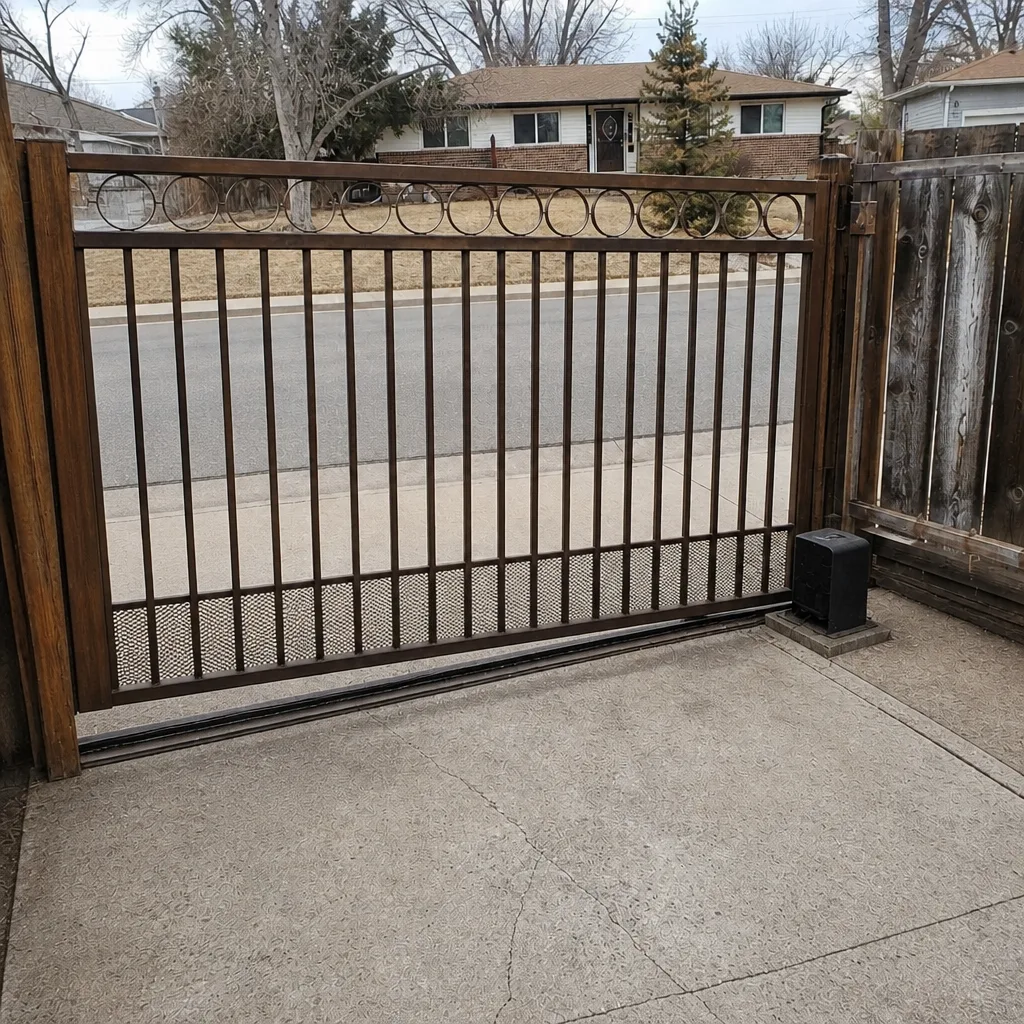
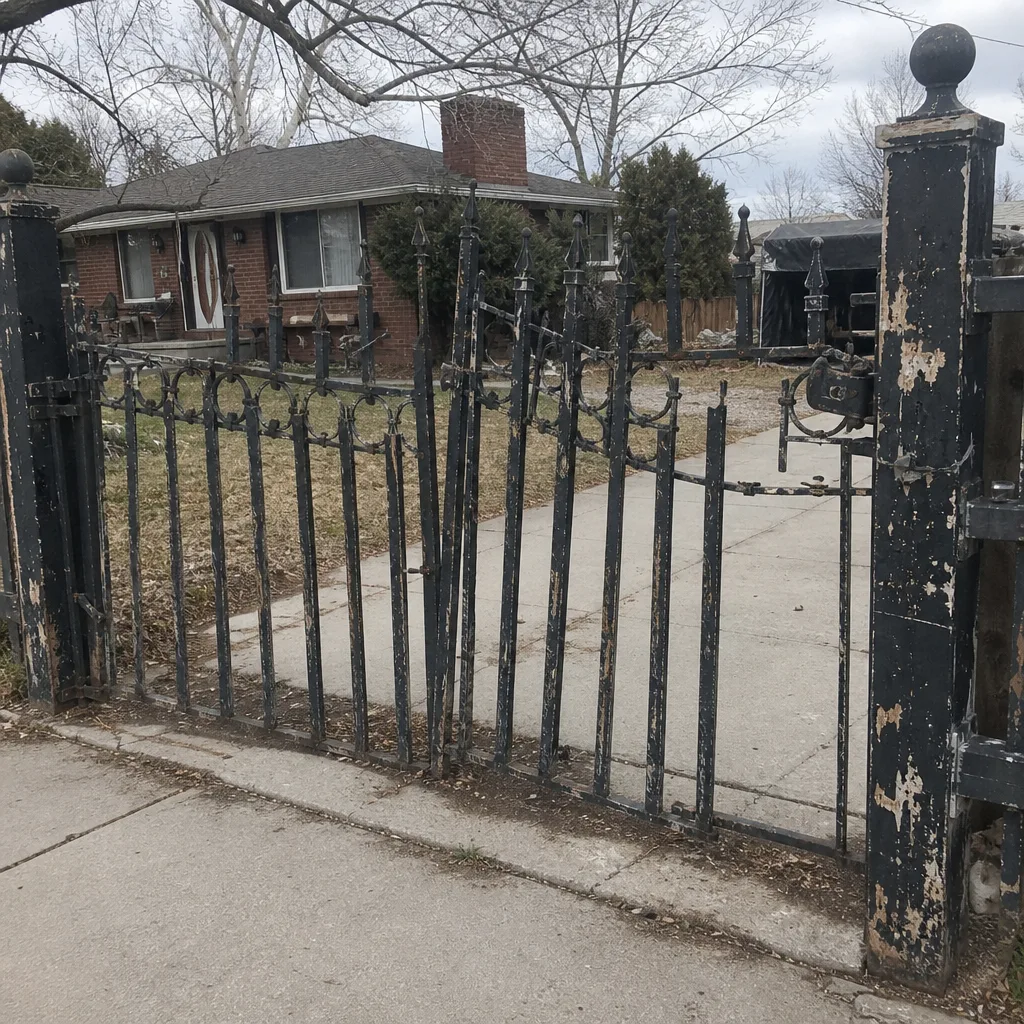
See the difference
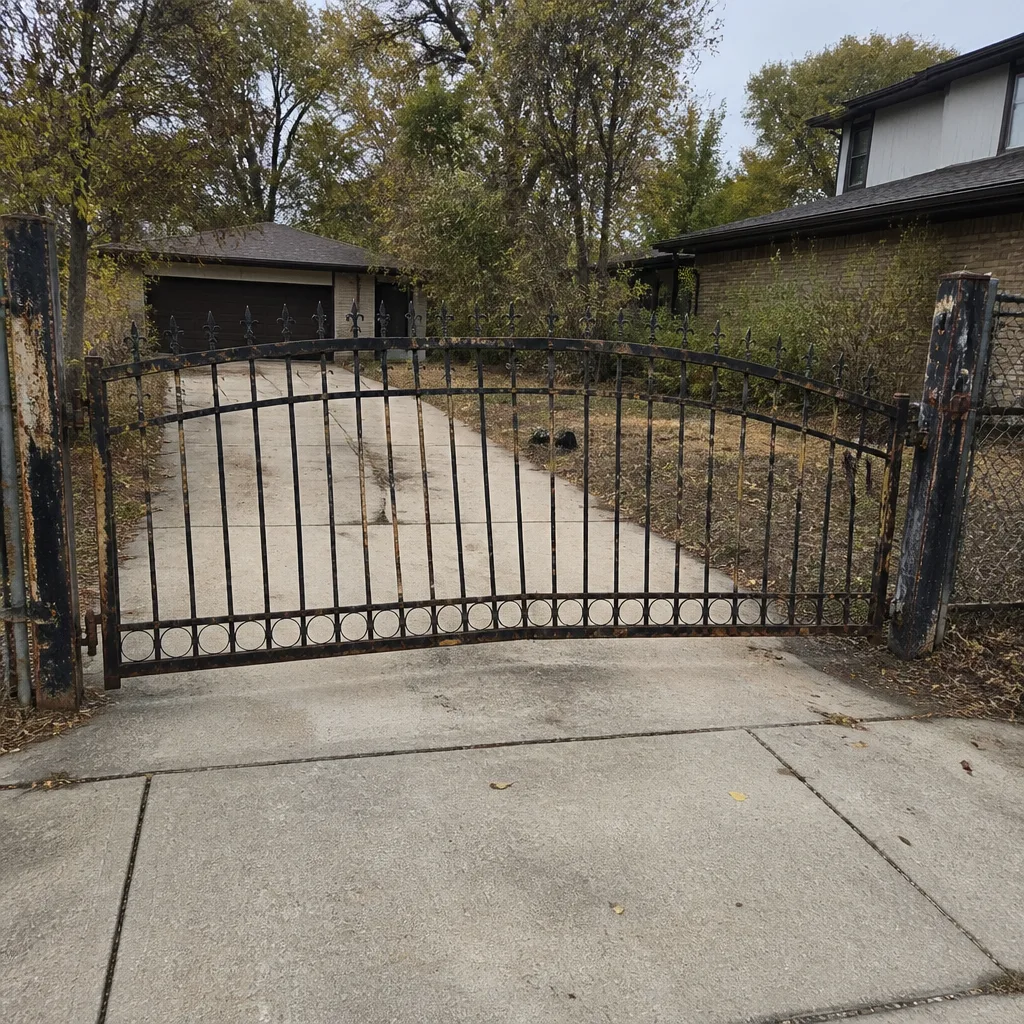 Before
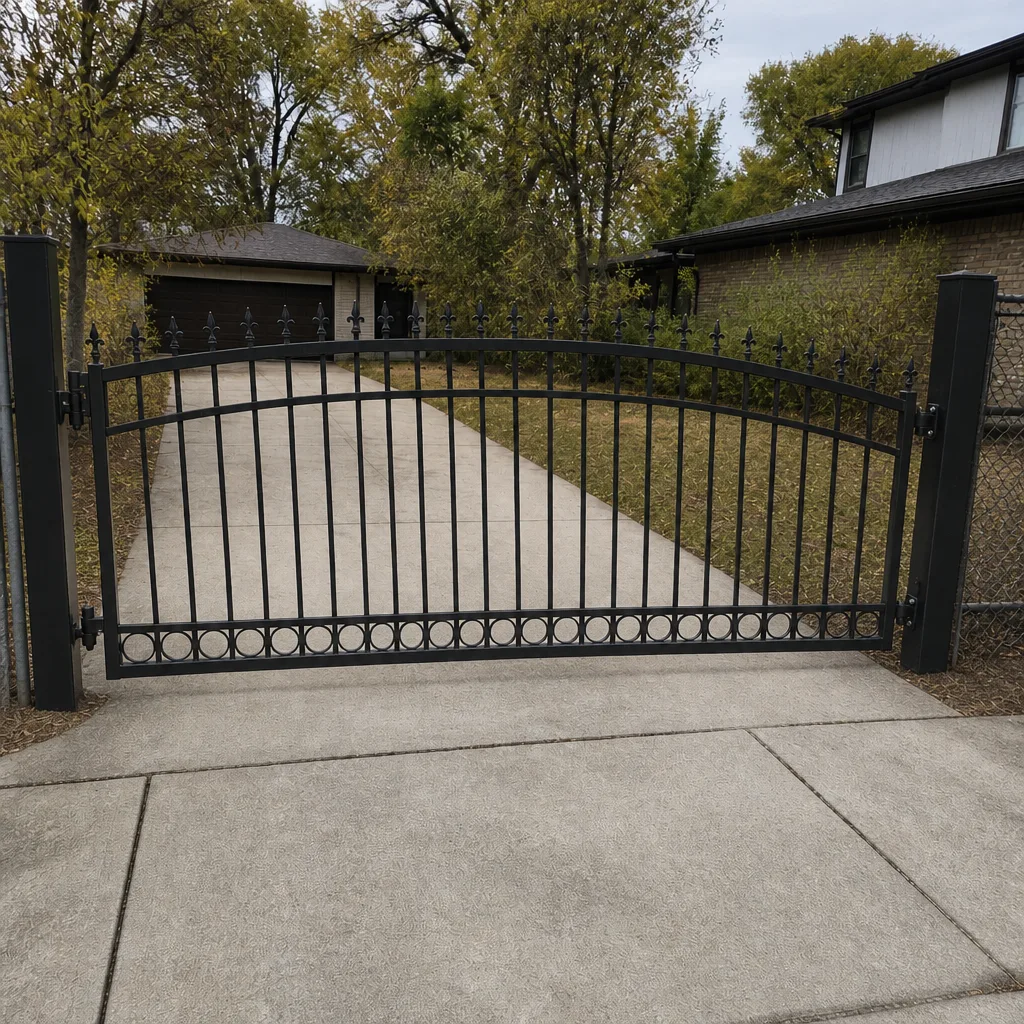 After
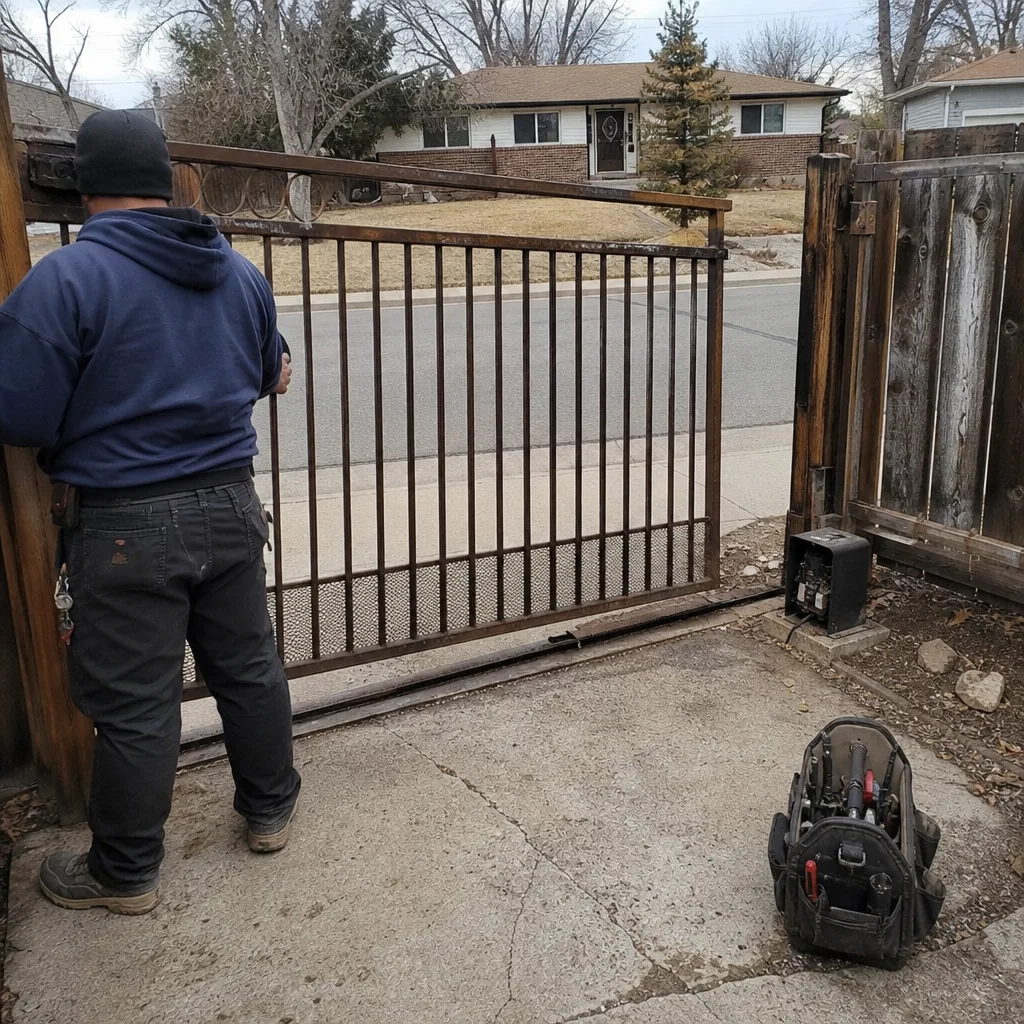 Before
 After
 Before
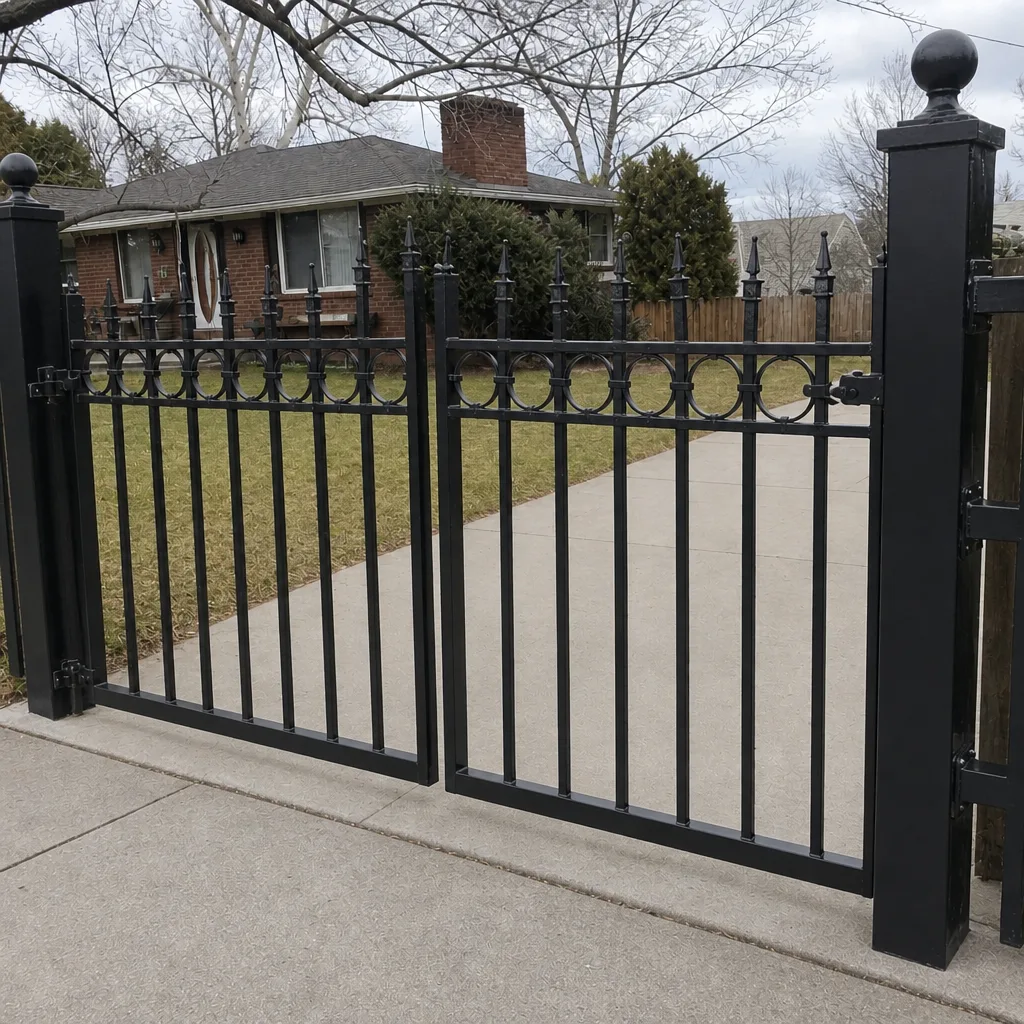 After
When to Call a Professional
Call a professional when the gate involves electrical work, when the gate is heavy and automated, when the post has moved, or when the safety edges aren’t working. Those four situations carry real risk for anyone without training. Also call when the gate has failed in a way you can’t diagnose: an intermittent operator fault, a gate that works for weeks and then fails, a remote that only sometimes works. Intermittent problems often trace to electrical or access-control issues that need a meter, not a hunch. Gate Repair Centennial offers free estimates in Centennial – call (866) 361-9624. We answer 24/7. Fast dispatch from 7am to 7pm, Sunday through Friday. The price is set per job by the written estimate, and we agree it with you before any work starts.
Frequently Asked Questions
The five most common causes in Centennial are structural movement from expansive clay and freeze-thaw cycles, mechanical wear in hinges and latches, electrical supply problems, operator or motor faults, and access-control failures. Knowing which category your gate falls into is the first step toward the right repair.
Same-day repair is often possible on straightforward mechanical and electrical problems. The best way to find out is to call and describe the symptoms; we’ll tell you honestly whether it’s a same-day situation or a scheduled visit. Call (866) 361-9624 for an exact quote – estimates are free.
Yes. We work across a wide range of gate brands, including DoorKing, Mighty Mule, and Ghost Controls, along with LiftMaster, FAAC, Viking, and others. We’re brand-agnostic, so you won’t hear that your gate’s brand is unsupported.
Not necessarily. A gate that reverses before closing often has a safety-edge trip or a limit-switch issue, but it can also be an alignment problem where the operator is fighting mechanical resistance. The only reliable way to know is to diagnose the structure, mechanism, electrical, and operator layers in order. Call (866) 361-9624 and we’ll help you sort it out.
Yes, and that’s why we do both. The mechanical gate and the electronic operator are diagnosed together as a pair, because the operator’s behavior is often a report on the gate’s mechanical condition. That’s the whole reason electric gate repair is a separate service from general gate repair.
Yes. We handle repair, electric gate repair, and full installation, so we cover the full lifecycle of a gate. If a repair isn’t the right answer for your situation, installation is something we handle in-house.
Stop cycling the gate if you can, and have the post evaluated. A leaning post compounds the load on hinges and the operator every day it stays leaning. On a Centennial gate, a post that has shifted is the single most compounding repair on the list.
Yes. We handle residential and commercial gate types under one service model, including HOA entry gates and commercial access-control systems. Property managers get the same diagnostic approach as a homeowner.
The Bottom Line
Gate failures in Centennial come down to a small number of root causes, and the symptom you see rarely matches the layer that’s actually failing. Diagnose in order: structure, mechanism, electrical, operator. The expansive clay and freeze-thaw cycles under Centennial properties make post movement the most common structural culprit, and a leaning post compounds every day it’s left alone. Manual and automated gates need completely different diagnostic approaches, but the underlying method is the same. Know which repairs compound and which can wait. And when a problem touches electrical work, a heavy automated gate, a moved post, or a failed safety edge, that’s a job for a specialist. From a bent hinge to a failed motor board – diagnosed and repaired.
Ready to get your gate back on track? Call (866) 361-9624 for a free estimate. We answer 24/7. Fast dispatch from 7am to 7pm, Sunday through Friday. Estimates are free, the price is set per job by the written estimate, and we agree it with you before any work starts. We work exclusively on gates – it’s the only thing we do – and whether your operator is LiftMaster, FAAC, Viking, DoorKing, or anything else, we know it.
Written by the team at Gate Repair Centennial, serving Centennial since 2014.